Hybrid Power Plants for Reliable Energy Generation
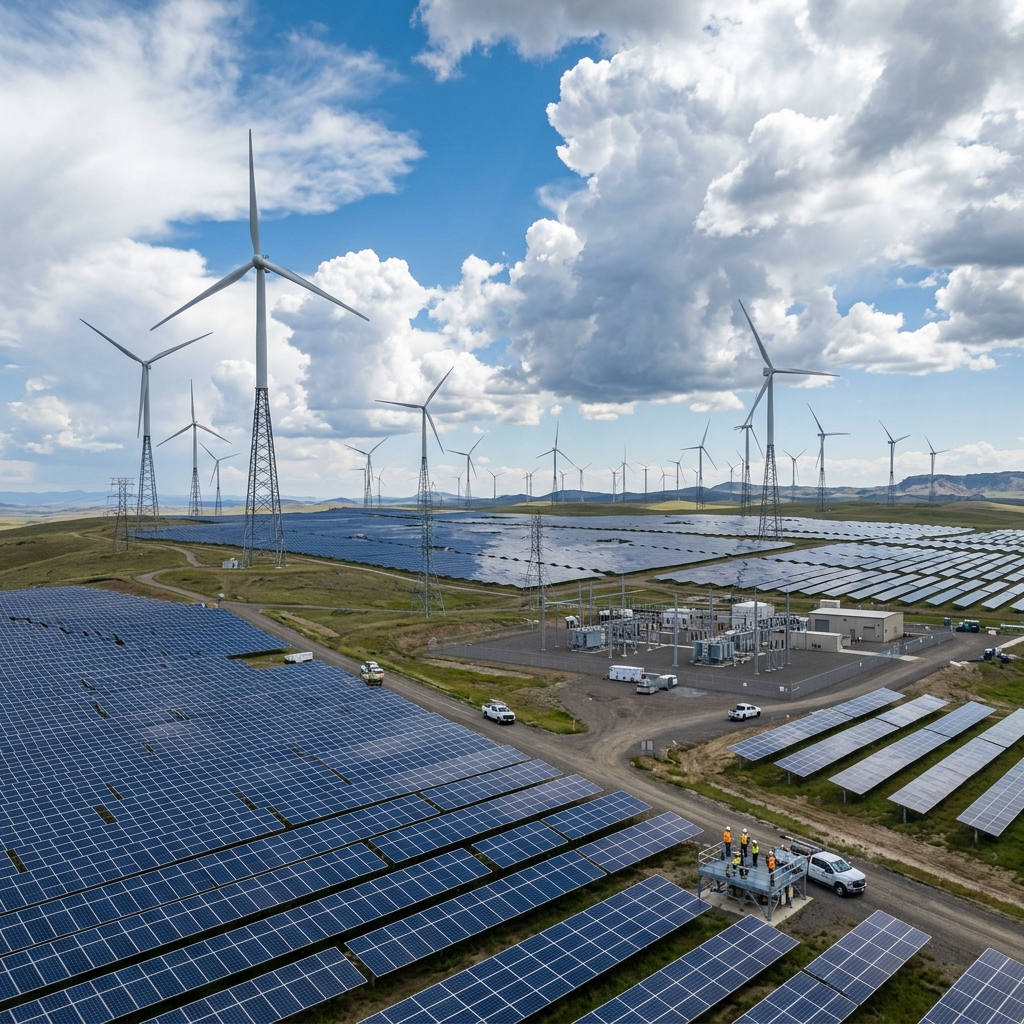
In the evolving landscape of global utility grids, intermittency remains the single greatest challenge for standalone renewable energy sources. GridWave Energy bridges this gap by delivering end-to-end, turnkey Engineering, Procurement, and Construction (EPC) solutions for multi-megawatt Hybrid Power Plants. By co-locating solar photovoltaic (PV) arrays, wind turbine generators (WTGs), and Battery Energy Storage Systems (BESS) within a unified boundary, we deliver stable, dispatchable, and round-the-clock (RTC) green power.
Integrating different generation profiles requires deep engineering capability, synchronized power electronics, and sophisticated control systems. GridWave's multidisciplinary team handles the complete project lifecycle—from resource micro-siting and grid capacity studies to balance of plant (BOP) execution and grid synchronization. Our engineered hybrid plants smooth out energy generation curves, optimize land use, and lower the Levelized Cost of Energy (LCOE) for grid developers, utilities, and corporate energy buyers.
01
Co-location Feasibility
- Wind-Solar correlation mapping
- Shadow profiling of WTGs
- Topographical & geo survey
02
Interconnection & Grid Study
- Evacuation capacity check
- Transient stability tests
- Grid code compliance
03
Sizing & Engineering
- Sizing Solar vs WTG vs BESS
- Load-flow distribution design
- Capacity optimization
04
Procurement & Sourcing
- Tier-1 PV modules & WTGs
- Hybrid controller sourcing
- Battery modules procurement
05
Civil & Site Works
- WTG & solar foundations
- EHV corridor civil works
- Access roads & crane pads
06
Electrical & BESS Setup
- Pooling substation setup
- DC/AC cabling networks
- Grid-scale battery sync
07
HPPC & SCADA Integration
- Dispatch algorithm setup
- Power control tests
- Remote NOC monitoring
08
Commissioning & Grid Sync
- Substation insulation checks
- Commercial grid operations
- Regulatory COD handover
Advanced Hybrid Technology Stack
For optimal power generation profile and grid stability, GridWave implements a state-of-the-art hybrid technology stack that mitigates environmental variability:
High-Yield Bifacial PV Systems
Utilizing trackers and bifacial panels to absorb maximum direct solar light and ground reflection albedo.
Intelligent Wind Turbine Generators
Equipped with reactive-power compensation systems to dynamic grid fluctuations.
Grid-Scale Battery Energy Storage (BESS)
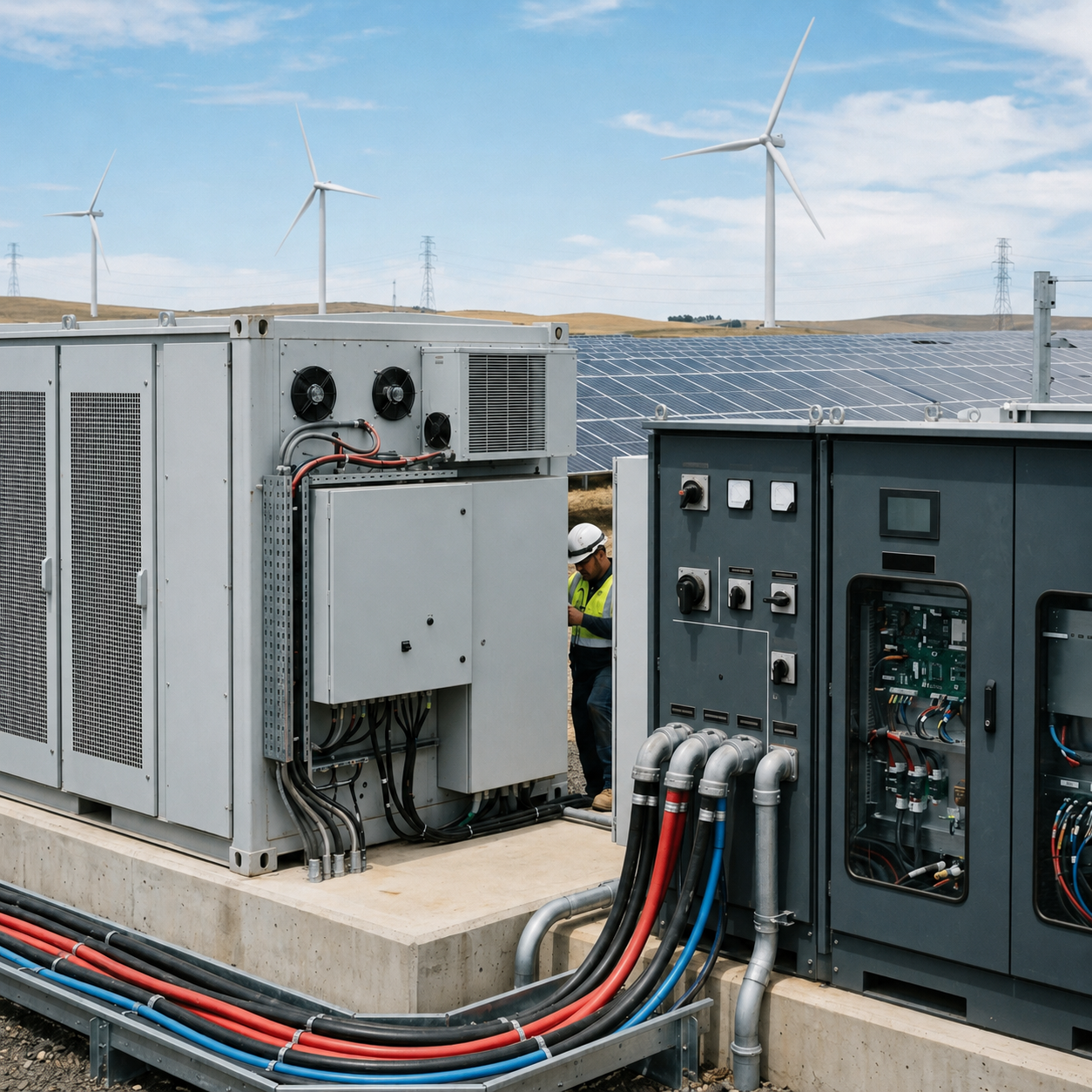
Lithium-ion containerized battery blocks designed for load shifting, peak shaving, and active frequency control.
Hybrid Power Plant Controller (HPPC)
The centralized brain of the plant that orchestrates real-time active/reactive power dispatch between solar, wind, BESS and the grid.
Engineered by Hybrid Power Experts
Hybrid plants have significantly higher electrical complexity. Our engineering division comprises certified power electronics specialists, system sizing analysts, and grid synchronization compliance engineers. GridWave applies strict HSE protocols, transient stability simulation studies, and power quality compliance reviews to ensure your hybrid asset operates safely, reliably, and efficiently for its 25-year design life.
Core Benefits for Project Developers & Investors
Co-locating wind, solar, and battery storage under a single grid interconnection agreement drastically improves project bankability and ROI.
Maximized Infrastructure Usage
Co-locating solar and wind assets enables shared EHV switchyards, transmission lines, access roads, and grid pooling substations—saving up to 20% on total Balance of Plant (BOP) CAPEX.
Increased Capacity Utilization Factor
Solar and wind profiles are naturally complementary (wind peaks at night and during monsoons; solar during the day). Combining both increases the plant's Capacity Utilization Factor (CUF) from 20-30% to 50-65%.
Enhanced Grid Compliance
Advanced BESS and HPPC controllers eliminate localized grid instability, offering ramp-rate control, frequency response, and active voltage regulation to guarantee zero grid penalty compliance.
"We harmonize the natural variance of sun, wind, and storage to deliver firm, dispatchable, and utility-scale clean energy that grid operators trust and investors value."
Frequently Asked Questions
Learn more about our design philosophy, grid compliance capability, and hybrid EPC integration workflow.
-
01 What are the main advantages of a hybrid power plant over standalone wind or solar?
The primary advantage is a significantly higher Capacity Utilization Factor (CUF) and generation consistency since solar (daytime) and wind (often peaking during evenings and night) complement each other. This results in stable, dispatchable power and saves significant capital costs by sharing common grid evacuation systems and land boundaries.
-
02 How do you size and integrate Battery Energy Storage Systems (BESS) in hybrid plants?
We perform site-specific generation simulation runs using multi-year weather profiles to optimize the BESS ratio. We size the battery capacity based on contract specifications (e.g. Peak Shaving, Power Quality Control, or Round-the-clock power supply), integrating containerized battery racks directly with bidirectional storage inverters.
-
03 What role does a Hybrid Power Plant Controller (HPPC) play in grid compliance?
The HPPC serves as the centralized automation controller that monitors grid voltage and frequency at the Point of Interconnection (POI). In milliseconds, it controls active and reactive power dispatch between wind turbines, solar inverters, and BESS to maintain grid compliance parameters.
-
04 What is the typical execution timeline for a utility-scale hybrid project?
Execution timelines vary between 12 to 18 months depending on site capacity, transmission corridor length, and local permit approvals. Our optimized engineering, procurement, and heavy lifting crawler mobilization workflows ensure we commission the plant on schedule.